January 2014: Rabigh and Jeddah, Saudi Arabia
I traveled to the west coast
of Saudi Arabia at the invitation of Dean Mohammed Al-Jahdali (a marine biologist) to start a
collaboration between biologists at King Abdulaziz University – Rabigh Campus and FIU’s Marine Science
Program. We are working to develop a project
to restore and study Rabigh Lagoon and the surrounding waters of the Red
Sea.
After a long but pleasant
couple of flights, I arrived in Jeddah in the middle of a sandstorm (luckily it
was nice enough as we flew over the Red Sea on the Egyptian side to have a
great view of the desert and coast).
 |
| The Egyptian coast of the Red Sea. |
It’s the first time I’ve been in a sandstorm, but I am told that they
are very uncommon in this area! Needless to say with the high winds and flying
sand I was a bit concerned about getting out on the water eventually! The drive north from Jeddah to the small city
of Rabigh lasted about an hour and a half and was through pretty much constant
wind and sand. I am very glad I didn’t have to drive!
 |
The pictures just don't seem to show just how windy and
sandy it was! |
I spent the first day and a
half talking to the scientists at KAU and touring their new campus and the
city. We had some amazing meals
including fresh local seafood. By the
time we headed out to the lagoon I was really excited to see – and swim in –
the Red Sea. The trip was awesome. We drove across hard-packed sand roads and
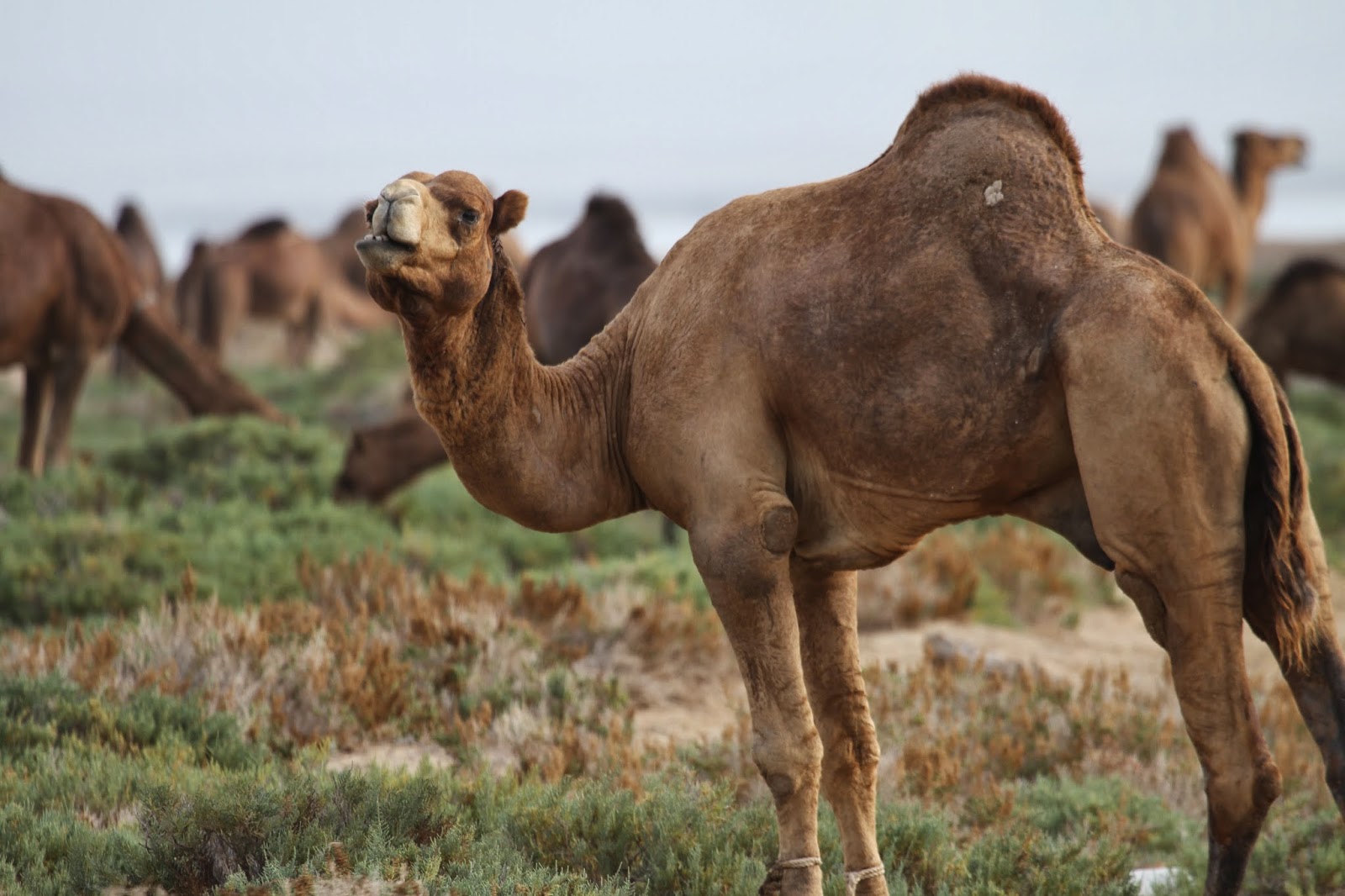
encountered a large group of wild camels feeding along the shores of the lagoon
early in the morning. Once we left them,
we drove along the shore of the lagoon and saw the roads that had blocked much
of the flow of water from the lagoon to the Red Sea – forcing it through a
single narrow pass until the government removed one of the roads just a few
months ago. Still, it looks like a
couple of bridges to replace the roads with a couple pipes running through them
would help the lagoon tremendously.
 |
| Road blocking natural flow to and from the lagoon |
 |
| Pipes under the road don't let enough water through |
Based on a quick look around,
there is no question that the lagoon could use some restoration work. Although the corals, seagrass and mangroves
near the mouth of the lagoon that has always been open look pretty good, those
farther away are not faring as well.
Still, there is a good amount of live coral and with the newly opened
waterway, there is a good chance for restoration to make a big difference while
Dean Mohammed works to have more flow restored to the bay.
 |
| Heading out onto the lagoon |
 |
| Seagrass in the lagoon covered by sediment |
 |
| Coral and sponge inside the lagoon |
 |
| Mangroves provide important nursery habitat for fish |
Towards the end of our tour
we had a chance to quickly poke the boat out to the reef that lies along the open
coastline. We just went a few hundred
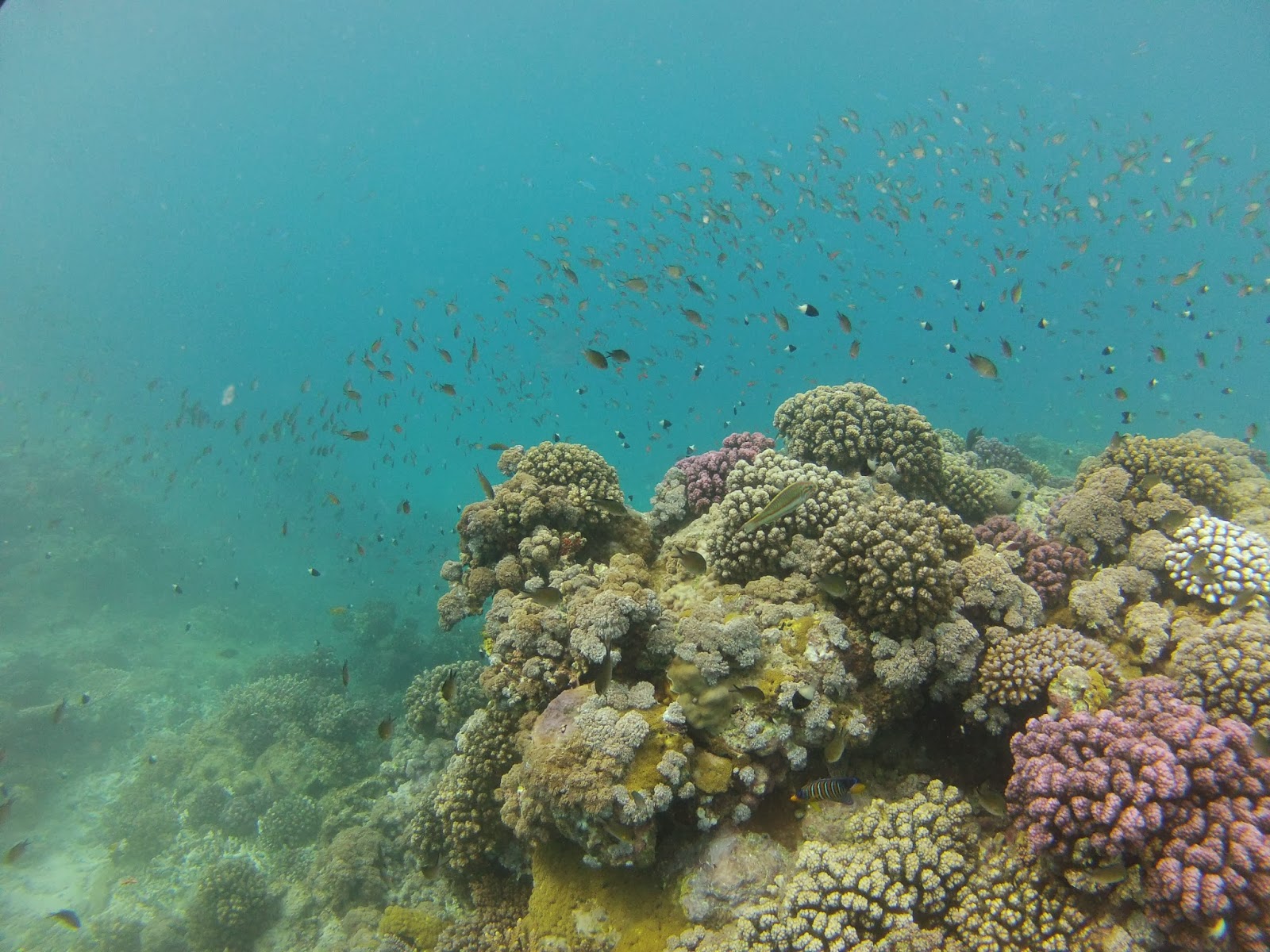
meters offshore to the reef crest and I jumpped in. It took my breath away. The amount of living coral, the colors, and
the huge abundance of fish was maybe the best I have ever seen! Of course, Dean Mohammed said it was like
watching black and white TV compared to other areas down the coastline a
ways. I can’t imagine what that would be
like! Eventually, I was coaxed back into
the boat to head back to campus to discuss the project. I am pretty excited about the potential for a
team to do an incredible marine restoration project as well as some amazing
science in a beautiful area.
 |
| The reefs outside the lagoon were covered in living corals and fish. |






.jpeg)
.jpeg)


